
Process and software
Assign stock status, reserve/forward replenishment rules, transport release and confirmation across ERP, WMS and controls. Define what happens after a delayed message, a duplicate confirmation or a failed replenishment.
Technical note · Worked planning example
Compare two ways of supplying production: automate the compatible stock, or use a smaller automated store replenished from reserve. This worked example examines the capacity, replenishment work and costs needed to compare those options.
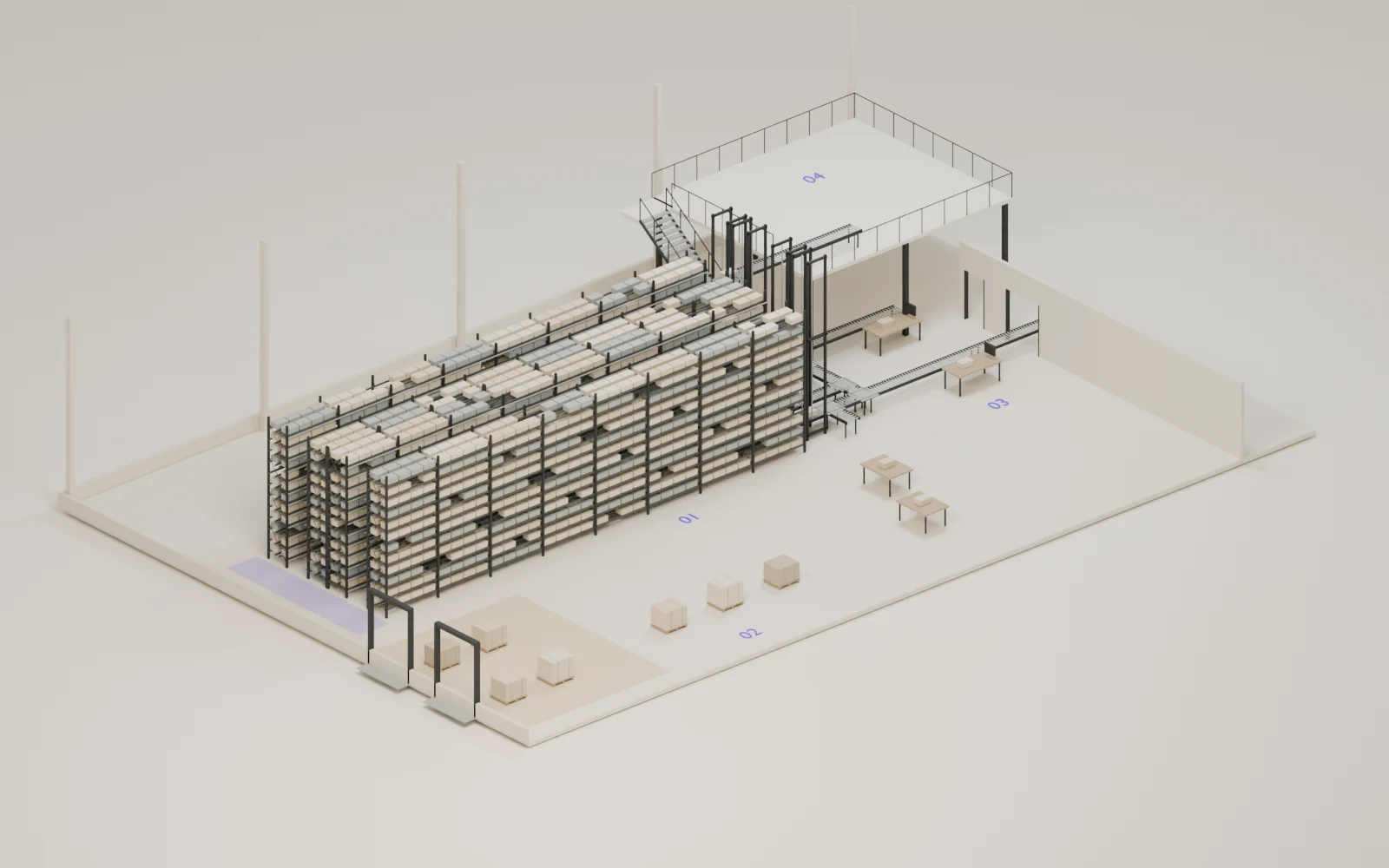
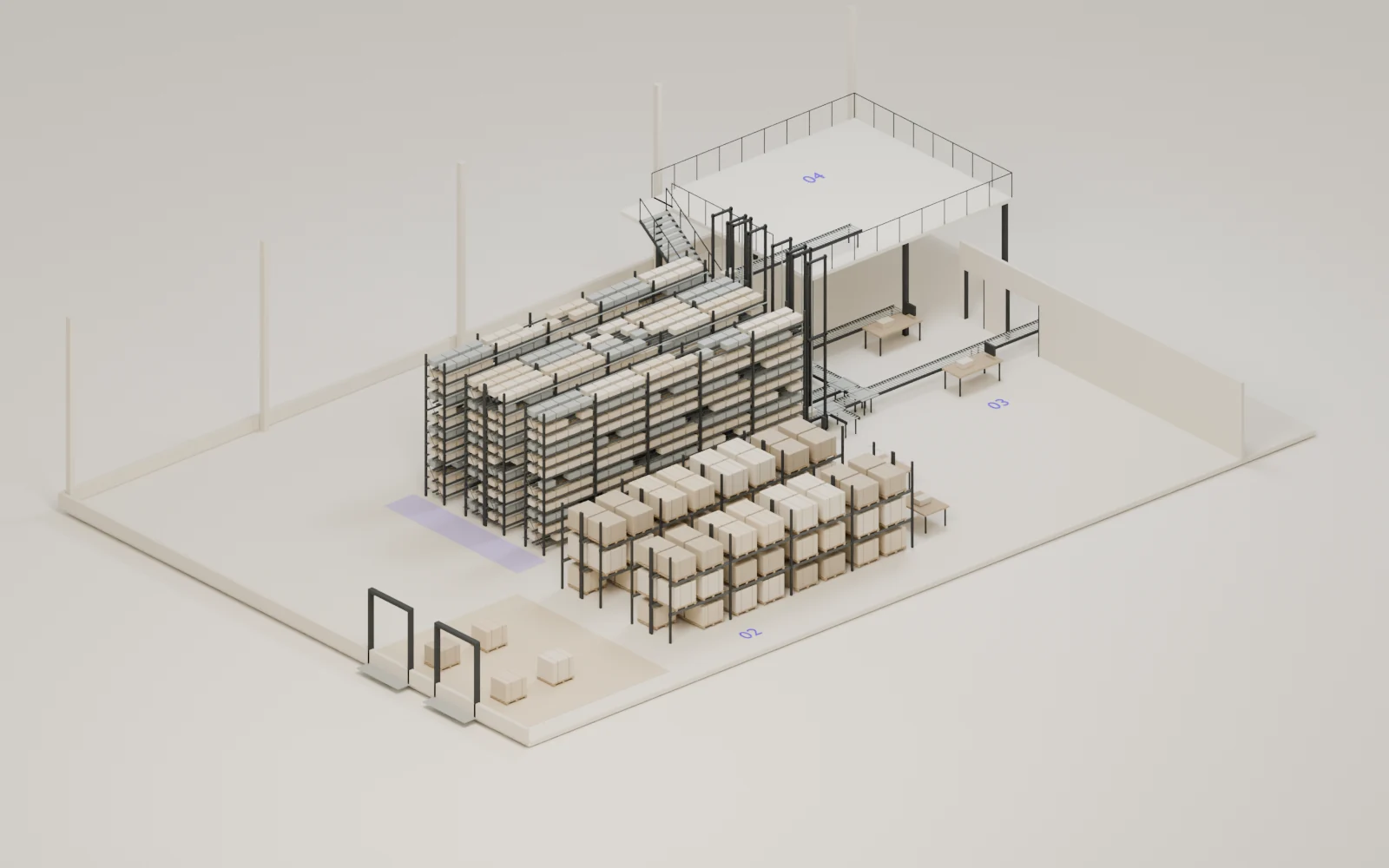
Worked example with assumed stock, flows and costs. The drawings are schematic; capacity is calculated below.
01 / 05
The reference stock is equivalent to 12,000 occupied product totes after defining the compatible goods and their packing. In option B, 7,200 remain in automation. The remaining contents, equivalent to 4,800 totes, are held in reserve. They still need space, handling and a replenishment policy.
| Planning requirement | Option A | Option B |
|---|---|---|
| Occupied product-tote equivalents in automation | 12,000 | 7,200 |
| Maximum planning occupancy | 80% | 80% |
| Required usable product locations | 15,000 | 9,000 |
| Contents outside automation, in tote equivalents | 0 | 4,800 |
6,000 fewer usable automated locations represent a 40% reduction in the required locations. This does not establish a reduction in equipment price or total investment.
Required usable locations = occupied product totes ÷ 80%, rounded up. The occupancy limit is an example assumption. A supplier must distinguish usable product locations from installed positions, technical buffers and inaccessible locations. Reserve contents need a separate conversion into pallets, shelves or other carriers; 4,800 tote equivalents are not 4,800 reserve pallet positions.
In a project, the split comes from SKU coverage, replenishment frequency, batch sizes, service windows and growth. A convenient percentage of the stock is not sufficient to select the smaller store.
02 / 05
Assume 300 additional reserve-to-forward tasks per operating day. Each requires 180 seconds of additional active labour across the complete task, after deducting work both concepts already require. This includes the additional retrieval, travel, scanning, handling and return journey.
300 tasks/day × 180 seconds ÷ 3,600 = 15 person-hours/day. At 220 operating days/year and CHF 60/hour, that workload is valued at CHF 198,000/year.
This is one cost component in the comparison. It does not establish a payroll increase or a number of additional employees. The staffing and shift plan determines whether existing capacity can absorb the work. The complete investment comparison must also include reserve space and equipment, software, maintenance, transition, financing and residual value.
| Incremental active time per task | Annual labour cost at the assumed rate |
|---|---|
| 90 s | CHF 99,000 |
| 180 s | CHF 198,000 |
| 300 s | CHF 330,000 |
The daily task count is an independent assumption, not a calculation from the reserve stock. In a live project we measure or model the complete task and test different replenishment policies. The 5-year figure holds workload, days and rates constant and applies no discounting. It is not a full lifecycle cost or an investment break-even result.
03 / 05
Both concepts must deliver the same 80 loaded tote handovers to picking or production in a 15-minute reference window. Both receive 60 partly filled product totes back from picking. The two assumed infeed schedules differ. These are tote movements at the automated-store boundary, not order lines, picks or crane double cycles.
Option A · 15 min
Option B · 15 min
| Tote handovers in the same 15 minutes | Option A | Option B |
|---|---|---|
| Loaded totes leaving the store | 80 | 80 |
| Partly filled totes returning | 60 | 60 |
| New loaded totes entering | 10 | 30 |
| Total entering the store | 70 | 90 |
| All one-way handovers | 150 | 170 |
Option B assumes 30 new inbound totes instead of 10. It does not add both values. This illustrates a possible change in timing; forward stock does not inevitably increase annual automation cycles. Empty carriers and exceptional movements require their own profiles.
Ask each bidder to demonstrate that its proposed configuration can handle the simultaneous inbound and outbound flows, order priorities and buffer requirements. Check recovery after a lift, station or aisle fails. Adding nominal equipment rates does not establish system performance when equipment shares conveyors, lifts or operators.
Crane-based miniloads, shuttle stores and cube-based systems have different capabilities and constraints. Compare the proposed configurations against the same stock, load units, peak flows, building conditions and recovery requirements. A generic headline rate is not enough to rank these technologies.
| Technology candidate | What the supplier must demonstrate |
|---|---|
| Crane-based miniload | Storage and retrieval on each aisle, load-handling depth, access to stock during an aisle outage, and the connection to stations and other floors. |
| Shuttle system | Throughput across levels, lifts and shared conveyors with simultaneous inbound and outbound flows. Check sequencing, future expansion and what happens when a shared resource is unavailable. |
| Cube-based storage | Fit of bins and goods, the offered robots and ports, preparation of requested bins, priority orders and the connection between the WMS and the system controller. |
04 / 05
In this example, the full-stock concept serves as the common tender baseline because it avoids the additional reserve-to-forward replenishment process. Request forward stock and reserve as a fully specified, separately priced alternative. Compare the complete costs, operating performance and implementation requirements before recommending either option.
Specify compatible load units, usable capacity, mixed peak profiles, building interfaces, software responsibilities and acceptance scenarios. Require deviations and optional arrangements to be stated explicitly.
Compare equipment, reserve handling, software and licences, ERP changes, building interfaces, installation, tests, training, ramp-up, service and spares. Count shared work only once and identify what the client must provide.
A paid planning stage can resolve open design details before committing to the full installation. Agree its deliverables, fee, dates, rights to use the work and exit conditions. Selecting one planning partner reduces competition; two paid finalists may retain it longer at additional cost.
Recommend the option and bidder that best meet the agreed requirements and investment case. State the conditions still to be met before placing the order, including price validity and commitments to delivery capacity.
05 / 05
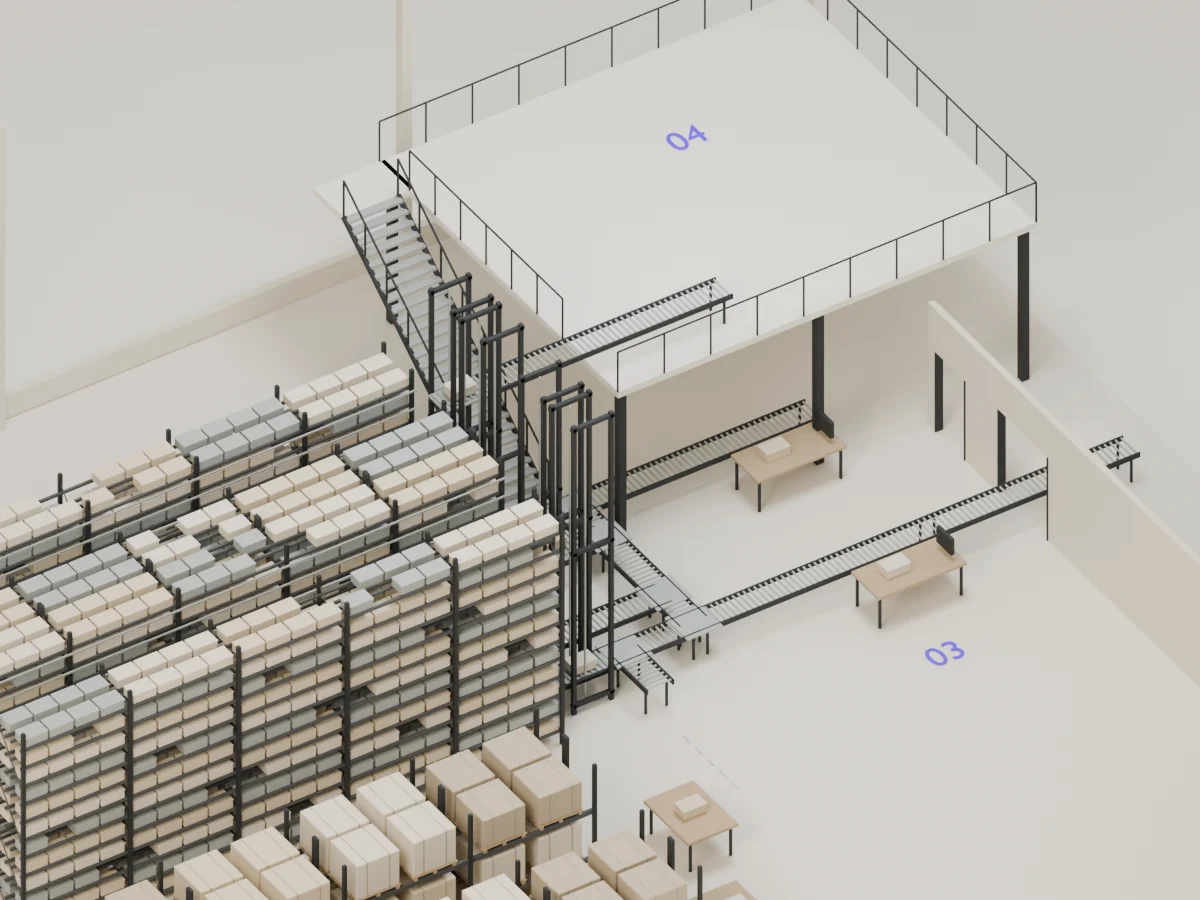
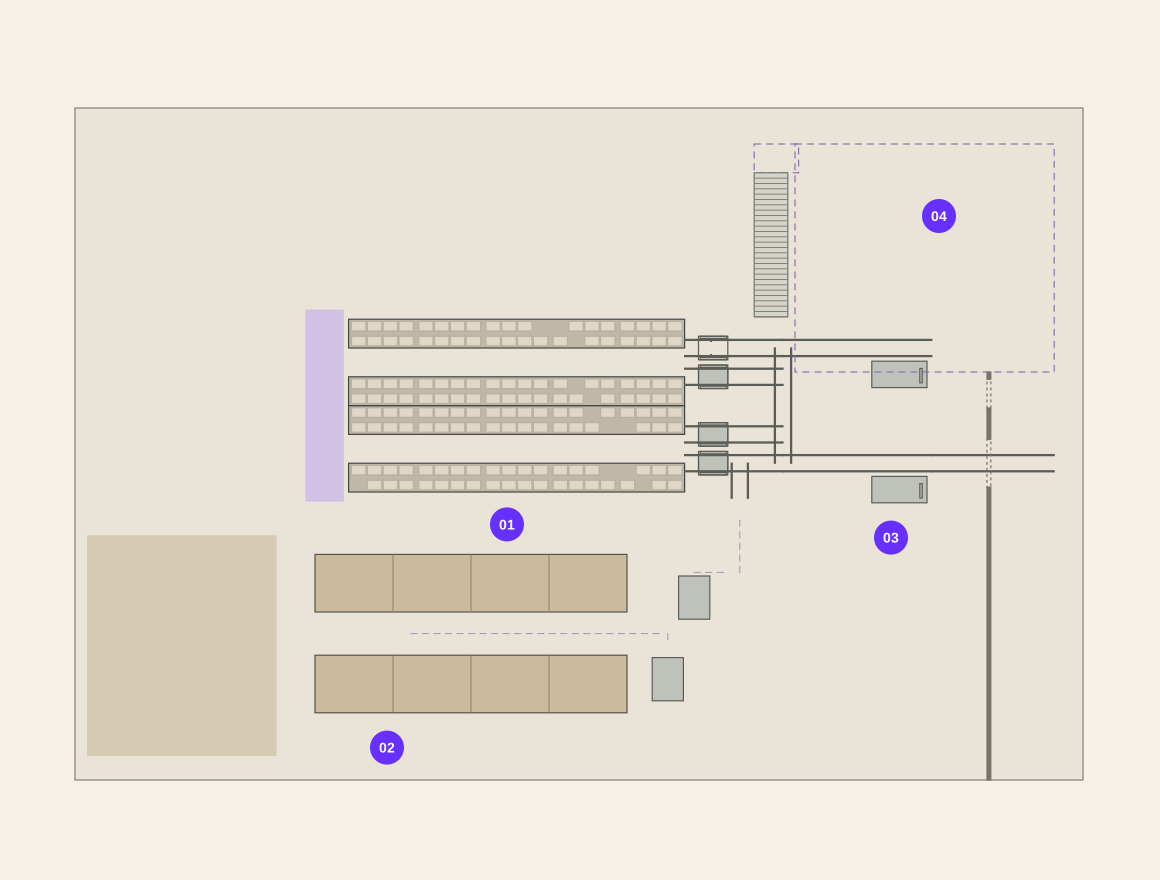
A future floor connection can share the same lift used for picking. An expansion can occupy the space needed to replace a machine. Physically available stock may still be blocked in the ERP. The detailed plan and system design must resolve those operating consequences.
Assign stock status, reserve/forward replenishment rules, transport release and confirmation across ERP, WMS and controls. Define what happens after a delayed message, a duplicate confirmation or a failed replenishment.
Coordinate carrier dimensions, transfer heights, floor openings, maintenance and replacement space with the building and equipment teams. Allow for the access and space that later expansion will need.
Include simultaneous inbound and outbound flows and recovery cases in the test plan. Test integration with the actual systems, increase volume in defined stages, train the operating team and address recurring faults and backlogs. Acceptance must be based on the agreed operating performance.
Yes. A lower installation cost, use of existing reserve space or expansion flexibility may outweigh extra work. The decision needs the complete cost and service comparison, including a feasible replenishment and staffing plan.
The stock and labour arithmetic alone cannot establish a product configuration. Load units, building fit, mixed-flow performance, availability and complete supplier offers are also needed. The tender keeps viable technologies comparable until those questions are answered.
No. It allows requirements and viable alternatives to be developed without starting from one supplier portfolio. Comparable competitive offers make price, scope and risks easier to assess. The recommendation considers the complete investment and operation, not only the equipment price.
Describe the operating requirement and any available building plans or supplier offers. We can identify the next decision and the evidence needed to make it.